
Does your loved one struggle with forgetting familiar faces, repeating the same questions, getting lost in familiar places, or refusing to bathe or change clothes? Have you noticed mood swings, changes in personality or temperament as the sun goes down, anger or anxiety that seem to come out of nowhere, or a sudden fear of water, noise, or certain textures? Maybe they constantly peel labels or napkins, wander at night, or insist they already ate or took their medicine.
If any of this sounds familiar, you’re not alone, and you’re in the right place. At Leading Edge Senior Care, we’ve seen it all from the first signs of forgetfulness to the most advanced stages of dementia. We understand how unpredictable, emotional, and exhausting this journey can be for both the individual and their family. We guide families through every step of the dementia journey with patience, expertise, and genuine understanding because no one should have to face this alone.
Our Approach: Connecting the Dots in Dementia Care
Dementia affects every person differently. That’s why we don’t believe in “one-size-fits-all” care. Our approach begins with understanding your loved one’s life story—who they are, what they love, what calms them, and what frustrates them. Knowing the person behind the diagnosis changes everything.
Our Dementia Specialists complete advanced training focused on cognitive decline, behavior management, and emotional connection. We don’t just assist—we connect. We learn your loved one’s routines, preferences, fears, and triggers so we can turn daily challenges into moments of calm and comfort.
We often say: “There’s nothing you could tell us that we haven’t seen before.” That confidence comes from years of hands-on experience across every stage of dementia. We know how to spot subtle changes, prevent agitation before it starts, and help families breathe easier knowing their loved one is understood.
How We Bring Calm Into Their Day To Day Life
- Minimizing depression through memory-sensitive companionship: Our caregivers bring genuine friendship and emotional connection, easing loneliness with conversation, laughter, and meaningful engagement.
- Utilizing exercise to improve physical and mental health: Gentle movement like guided walks or chair stretches help reduce restlessness, boost mood, and support better sleep and mobility.
- Ensuring safety: We take a proactive approach to protect your loved one from confusion and potential hazards. Our specialists perform in-home safety checks, remove trip risks, and create clear walking paths. We also monitor for wandering tendencies, establish predictable routines, and use calm verbal cues to prevent agitation or unsafe behaviors.
- Social interaction helps keep the mind sharp: Conversation and shared activities stimulate memory and communication, keeping your loved one mentally and emotionally engaged.
- Maintain proper nutrition through meal planning and meal preparation: We create meals based on your loved one’s favorite foods and dietary needs, making them easy to eat and enjoy. Our caregivers offer reminders to eat, assist with mealtime setup, and establish consistent mealtime routines that reduce confusion and help your loved one feel relaxed and willing to eat.
- Hygiene: Our caregivers provide compassionate support with bathing, grooming, and dressing, helping your loved one stay clean and comfortable.
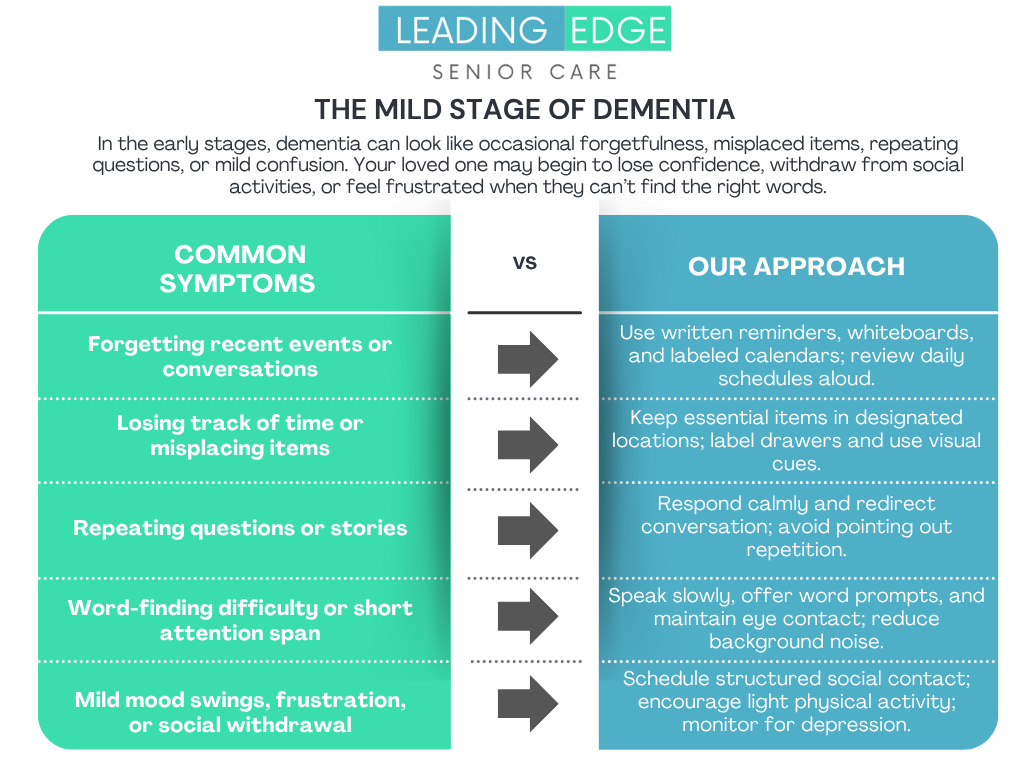
Mild Stage (Early Stage)
Why This Stage Matters
This stage is a crucial window for planning and proactive support. Since communication and decision-making skills remain strong, families can work together to create a clear plan for the future.
This Is the Best Time To:
- Discuss legal and financial planning
- Establish care preferences and daily routines
- Build reliable support systems and communication strategies
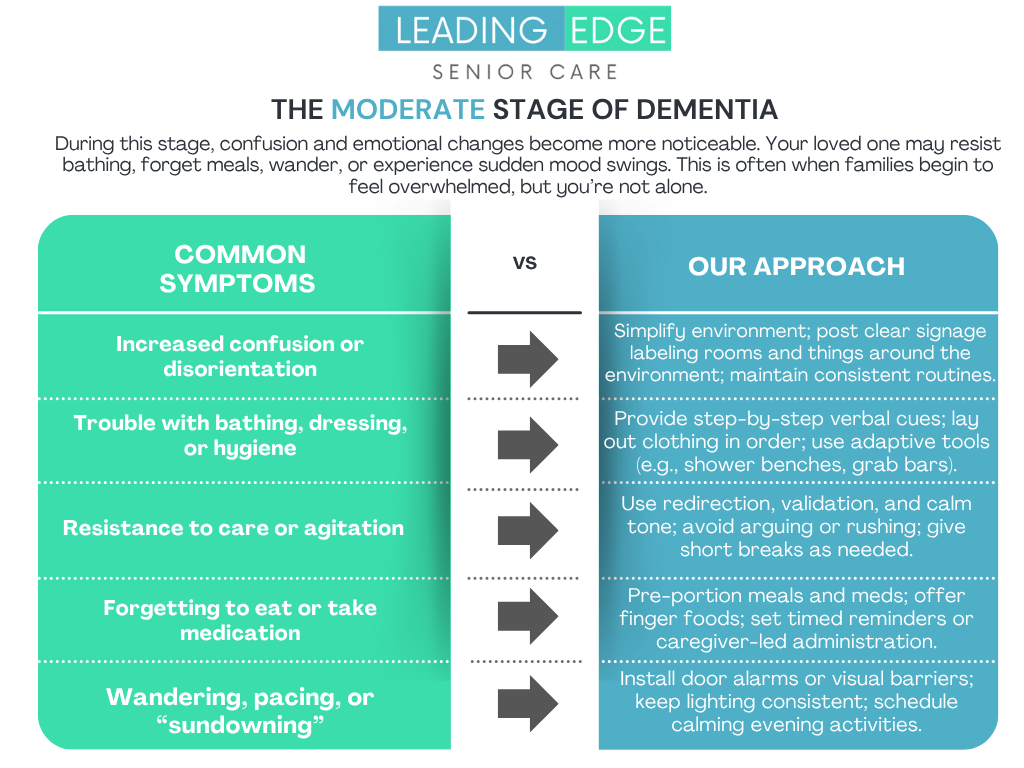
Moderate Stage (Middle Stage)
Why This Stage Matters
This is often the longest and most demanding stage, when families begin to feel the strain of daily caregiving. Structured routines, a calm environment, and professional support can significantly reduce stress for both the individual and their loved ones.
This Is the Best Time To:
- Introduce consistent daily routines and visual cues
- Simplify the home environment and establish safety measures
- Use redirection and validation techniques to manage agitation or resistance
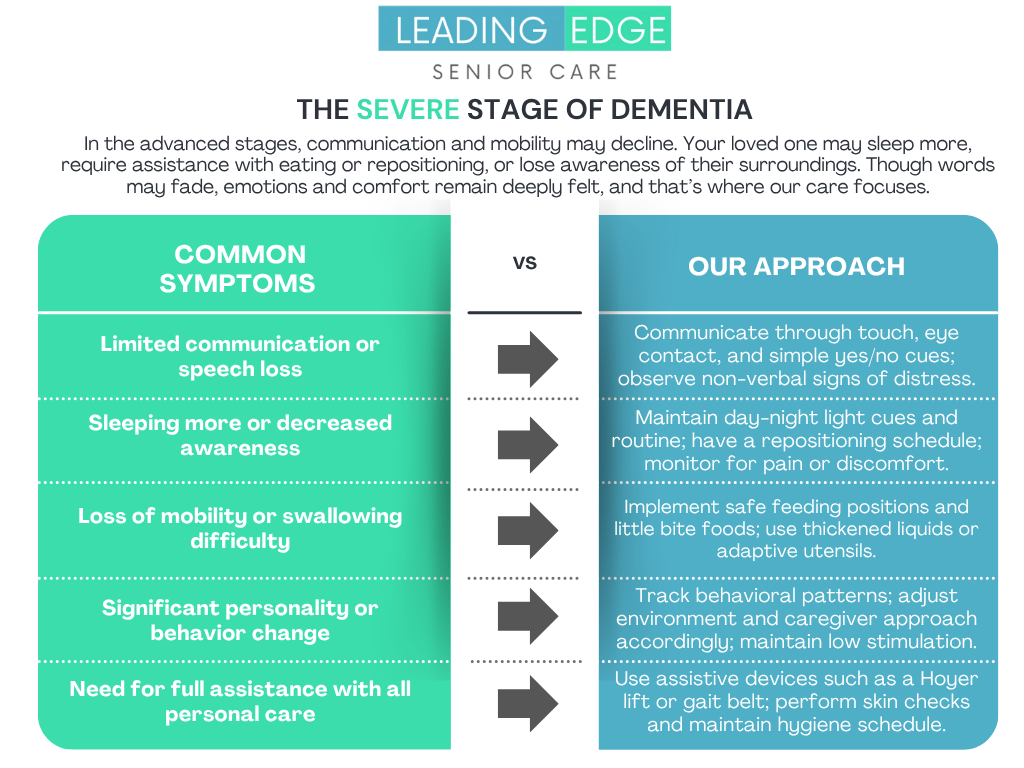
Severe Stage (Late Stage)
Why This Stage Matters
At this point, care focuses on comfort, safety, and preserving dignity. Specialized techniques such as repositioning, gentle touch, and sensory engagement help prevent discomfort and bring calm to each day. Families often need reassurance and guidance, making caregiver support just as essential as client care.
This Is the Best Time To:
- Coordinate care with medical providers and home care agencies
- Prioritize comfort through sensory therapy, soothing sounds, and calm routines
- Monitor nutrition, hydration, and skin integrity closely
MILD COGNITIVE DECLINE: Early changes in memory, attention, or problem-solving may appear. Individuals may need occasional reminders or support with complex tasks, while still maintaining independence in daily routines.
MODERATE COGNITIVE DECLINE: Memory loss and confusion become more noticeable. Individuals may need regular reminders, assistance with daily tasks, and support navigating familiar environments.
SEVERE COGNITIVE DECLINE: At this stage, individuals may lose the ability to communicate, recognize loved ones, or perform basic tasks. Continuous care and support is critical for safety and comfort in day-to-day living.
Life’s Memory Book
Each person’s story is unique, which is why we take time to learn who your loved one truly is, not just who they are today, but the life they’ve lived. Our Dementia Specialists work closely with families to gather photos, memories, and meaningful activities that reflect your loved one’s history and personality. We then create a Life’s Memory Book, a personalized tool used to engage your loved one in conversation and daily routines. This book helps spark recognition, comfort, and joy by connecting the present moment to familiar parts of their past. Paired with an in-depth understanding of behaviors and emotional triggers, the Life’s Memory Book allows us to deliver care that feels familiar, reassuring, and truly personal.
What Is Our Cognitive Training Program?
Our cognitive training program offers gentle, personalized mental exercises structured to support individuals living with dementia. While it does not reverse the condition, it can help slow cognitive decline and improve daily functioning.
- Preserve cognitive abilities for as long as possible
- Promote independence in daily tasks
- Foster emotional well-being and reduce behavioral symptoms
- Strengthen caregiver-client connection
Program Goals:
Free Cognitive Assessment
Do you think yourself or a loved one is showing signs of cognitive decline? Take our FREE assessment:
Connect with a Care Specialist
Questions or ready to start? Reach out—we’ll listen and help you map the next best step.