
What Is The Purpose Of Range Of Motion Exercises?
When people ask what is the purpose of range of motion exercises, they are often seeking more than a definition; they are searching for reassurance that small, gentle movements can truly make a difference. Range of motion exercises are designed to move joints through their natural span in order to maintain flexibility, support circulation, and prevent stiffness from gradually limiting mobility. Although these exercises may appear simple compared to strength training or aerobic workouts, their purpose reaches deeply into the foundation of daily movement and long-term independence.
As the body ages or recovers from injury, joints can become stiff due to inactivity, inflammation, or structural changes within connective tissue. Without regular movement, muscles shorten, ligaments tighten, and joint capsules lose elasticity, which can create discomfort and reduced mobility over time. Therefore, the primary purpose of range of motion exercises is prevention, ensuring that joints continue to move smoothly even when overall activity levels decline.
Preserving Flexibility And Joint Health
One of the most important purposes of range of motion exercises is preserving joint flexibility. Every joint in the body relies on movement to distribute synovial fluid, which lubricates surfaces and reduces friction between bones. When joints remain inactive for extended periods, this lubrication decreases, and stiffness becomes more noticeable, particularly in the morning or after long periods of sitting.
By gently guiding joints through controlled movements each day, individuals stimulate fluid circulation within the joint capsule, which supports comfort and mobility. Over time, this consistent motion helps maintain the natural glide and alignment of joint structures. As a result, everyday tasks such as reaching overhead, bending forward, or turning the neck while driving remain easier and less strained.
Furthermore, maintaining flexibility reduces the likelihood of compensatory movements that can lead to strain in other areas of the body. When one joint loses mobility, surrounding muscles and joints often attempt to compensate, which may create imbalance or discomfort. Therefore, range of motion exercises serve as a proactive measure that protects the entire musculoskeletal system.
Preventing Contractures And Loss Of Mobility
Another critical purpose of range of motion exercises is preventing contractures, which occur when muscles and tendons permanently shorten due to prolonged immobility. Contractures are especially common in individuals who are bedridden, recovering from surgery, or managing neurological conditions that limit voluntary movement. Without intervention, affected joints may gradually lose their full range, making even simple movements difficult or impossible.
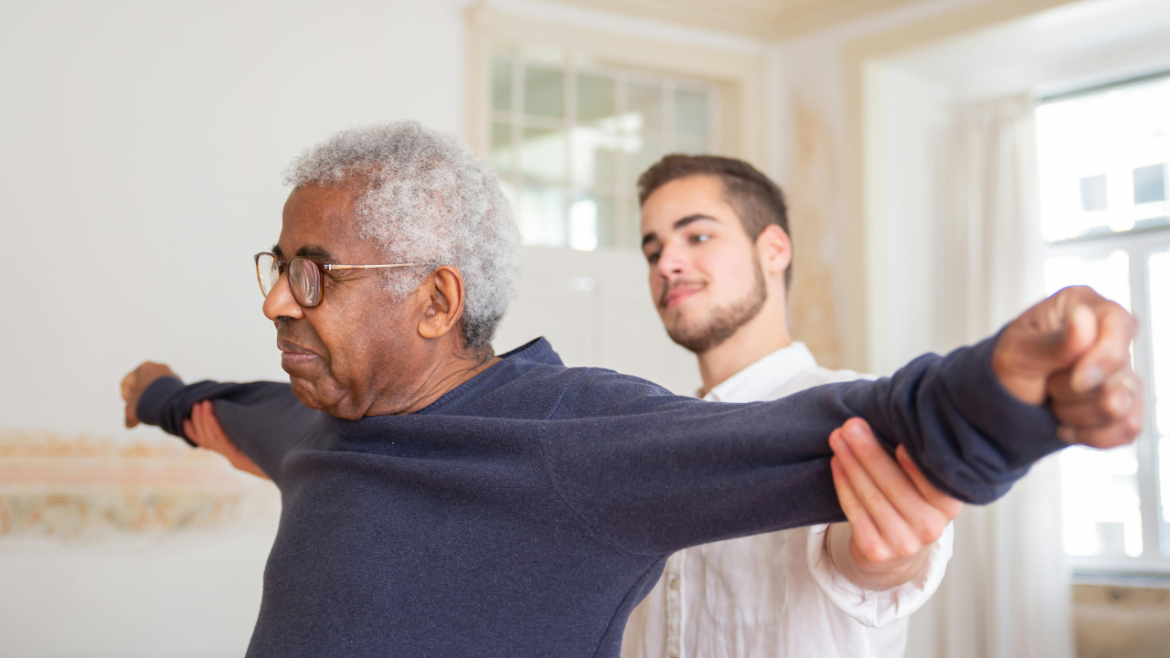
Gentle daily motion helps maintain tissue length and elasticity, reducing the risk of permanent restriction. For seniors, particularly those with limited mobility, these exercises may preserve independence by maintaining the ability to transfer, dress, and perform personal care tasks. In caregiving settings, passive range of motion exercises performed by a caregiver can help maintain joint health even when the individual cannot move independently.
By preventing contractures and stiffness, range of motion exercises contribute directly to quality of life. The ability to move comfortably affects not only physical comfort but also emotional well-being, as mobility is closely tied to autonomy and confidence.
Supporting Circulation And Reducing Swelling
In addition to preserving flexibility, range of motion exercises promote healthy circulation. Movement stimulates blood flow, delivering oxygen and nutrients to tissues while assisting in the removal of metabolic waste. For individuals who spend significant time seated or lying down, circulation can slow, leading to mild swelling or a feeling of heaviness in the limbs.
Regular joint movement encourages venous return, helping blood travel back toward the heart more efficiently. As circulation improves, many people experience reduced stiffness and a lighter sensation in the affected areas. Consequently, even brief sessions performed consistently can provide noticeable comfort.
Improved circulation also supports healing and tissue resilience. After injury or surgery, controlled movement helps maintain joint nutrition while preventing excessive scar tissue formation. In this way, range of motion exercises assist both recovery and long-term maintenance.
Enhancing Body Awareness And Confidence
Beyond physical mechanics, the purpose of range of motion exercises extends into psychological and emotional domains. Engaging in intentional movement increases body awareness, helping individuals recognize subtle changes in flexibility, balance, and strength. This awareness allows for early detection of potential issues before they escalate into more serious limitations.
Moreover, committing to a daily mobility routine fosters a sense of agency. When individuals take active steps to protect their joints, they reinforce the belief that aging or recovery does not mean surrendering control. Over time, this mindset contributes to resilience and reduces fear surrounding physical decline.
For seniors, particularly those navigating chronic conditions, this sense of control becomes deeply meaningful. The simple act of completing a mobility session can offer reassurance that they are doing something tangible to preserve their independence.
A Foundation For Long-Term Movement
Ultimately, the purpose of range of motion exercises lies in their ability to create a stable foundation for all other forms of movement. While strength training builds muscle and aerobic activity strengthens the heart, joint mobility ensures that these movements can occur safely and comfortably. Without adequate flexibility, more intense activities may become difficult or even risky.
Therefore, incorporating range of motion exercises into daily routines is not merely an optional addition to fitness; it is a fundamental practice that supports lifelong movement. Whether performed in the morning to reduce stiffness or in the evening to unwind tight muscles, these gentle exercises contribute to sustained mobility and comfort.
In the end, range of motion exercises serve as quiet protectors of joint health. They prevent stiffness, maintain flexibility, support circulation, and enhance confidence in movement. Through consistent practice, individuals can preserve their ability to move freely and live with greater comfort, strength, and dignity across every stage of life.